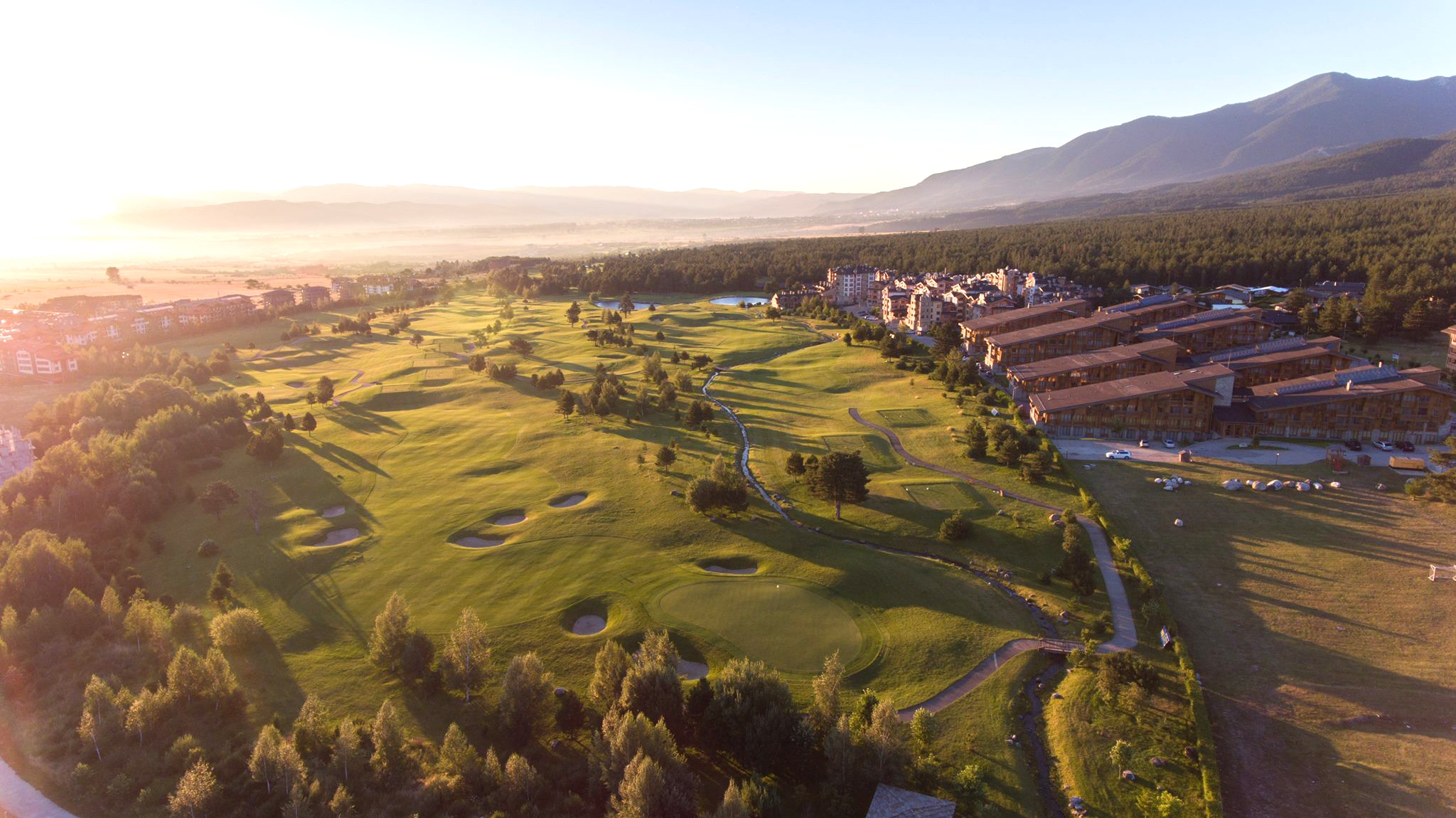
Costa de la Luz is the stretch of Atlantic coastline sitting directly between Spain's Costa del Sol and Portugal's Algarve, the two most developed golf regions in Europe. It gives you the same calibre of championship golf without the traffic, packed tee sheets, and resort sprawl those two neighbours are known for. For golfers who want serious courses in genuinely uncrowded surroundings, this is one of the strongest cases in southern Europe.
Geographically the region covers the provinces of Huelva and Cadiz within Andalusia, making it a natural place to compare wider Andalucia golf options. Huelva borders Portugal and has absorbed a lot of the Algarve's golf influence, while the coastline as a whole stays defined by natural dune landscapes, protected pine and marsh reserves, sophisticated low-density beach resorts, and working fishing villages rather than high-rise development. The result is a destination where you can play a full week of quality golf and still feel like you have found somewhere before the crowds did.
The honest trade-off is that the quiet character cuts both ways. If your group values relaxed evenings, good food, and space on the course, this suits you well. If the trip is built around lively nightlife, big bar strips, and a high-energy resort scene, Costa del Sol will deliver that better.
- Suits: golf-first groups, couples, players who want quality courses without congestion, anyone wanting beach and natural scenery alongside their golf.
- Less suited to: groups whose priority is buzzing nightlife, dense resort strips, or maximum bars-per-street after dark.
Costa de la Luz vs Costa del Sol vs the Algarve
The real question most golfers are weighing is whether to pick the quieter option or default to the two names everyone knows. Sitting between them is a genuine advantage: you get comparable course quality with noticeably fewer people, but you accept slightly less course density and a calmer evening scene. The table below sets out the practical differences for a golf group.
| Region |
Atmosphere |
Golf |
Best for |
| Costa de la Luz |
Quiet, natural, uncrowded |
Strong courses, links and parkland, easy tee times |
Golf-first groups and couples wanting space and scenery |
| Costa del Sol |
Busy, high-energy, developed |
Very high course density, well-known names, busier tee sheets |
Groups wanting nightlife and the most courses in one area |
| The Algarve |
Established, resort-focused |
Deep bench of resort courses, high polish |
Groups wanting proven resort golf with plenty of variety |
Choose Costa de la Luz when the trip is about the golf and the setting, and when a relaxed evening beats a late one. Choose Costa del Sol if the group wants livelier nights or the absolute maximum number of courses within short driving distance, and expect to book tee times further ahead to secure them at peak times. The Algarve wins when you want the most concentrated selection of established resort courses in a single trip. Where Costa de la Luz consistently comes out ahead, especially when comparing Spanish golf holidays, is availability and space: quieter tee sheets make it far easier to get a large group out together at the times you want.
Featured Resorts and Which Group They Suit
Your base sets the tone of the whole trip, so it is worth matching the resort to how your group actually travels rather than to the biggest name. The recurring headline bases below each carry a clear suitability note so you can self-select before you enquire.
| Resort |
Sub-region |
Who it suits |
| Precise Resort El Rompido |
Huelva coast |
Golf-first groups wanting on-site 36 holes and minimal transfers |
| DoubleTree by Hilton Islantilla |
Huelva coast |
Larger groups and mixed parties wanting reliable four-star comfort and beach access |
| Hotel Isla Canela Golf |
Huelva coast, Portugal border |
Groups pairing links golf with easy beach access near the Algarve |
| Barceló Montecastillo |
Jerez / Sevilla side |
Groups wanting a championship on-site course and a Jerez city and culture add-on |
If minimising daily driving matters most, an on-site golf base like El Rompido or Montecastillo keeps logistics simple. If beach access and space for a bigger, mixed-ability group is the priority, the Islantilla and Isla Canela bases along the Huelva coast are the stronger picks. Couples and smaller parties who want scenery over facilities tend to gravitate to the Huelva coast, while a group planning a city-and-golf combination is better served on the Jerez side, where sherry bodegas and Jerez old town are a short trip away.
The Golf Courses and How to Pair Them
Course variety is the reason to travel here rather than default elsewhere, so it helps to know the character of each track before you build a schedule. The region gives you both genuine coastal links and mature parkland within short reach of the same base.
- El Rompido North: parkland-style layout with elevation and pine, the more forgiving of the pair.
- El Rompido South: more open, links-influenced holes near the estuary, exposed to the breeze.
- Isla Canela Links: true low-lying links character with water and wind in play.
- Isla Canela Old: the more established, tree-lined test alongside the newer links.
- Islantilla: a 27-hole complex with undulating, technical parkland golf that rewards accuracy.
- La Monacilla: parkland course inland toward Huelva city, a solid mid-week variety option.
- Nuevo Portil: compact coastal parkland with water hazards, a good pace-of-play choice.
- Montecastillo: a championship parkland course on the Jerez side, the biggest-name test in the region.
How to build your week
For a three-to-five round trip, alternate exposed links days with sheltered parkland days so the group gets variety and a rest from the wind. A clean Huelva-based week runs El Rompido North and South on consecutive days, then a links round at Isla Canela, with Islantilla or Nuevo Portil filling the remaining slots, keeping every course within a short drive of one base. Open the trip with the more forgiving El Rompido North to let the group find its swing before the exposed links tests, and slot a course like Nuevo Portil in for a quicker round when energy is flagging late in the week. Book buggies for the hillier layouts like El Rompido North if the group has mixed fitness, and lock tee times early in shoulder months when green fees are keener but daylight is shorter. If your group's abilities vary widely, stagger tee times so faster and slower players are not forced into the same groups, and keep the more technical, accuracy-demanding tracks like Islantilla for mid-week rather than the first morning.
Getting There, Transfers and Best Time to Play
Getting to the Huelva coast is genuinely easy, which is part of the appeal: Faro in Portugal is often the closest airport for the western bases, with Seville a strong option and Jerez useful for the eastern side of the region. Flights from the UK run to around two and a half to three hours, and flight-inclusive golf packages can help coordinate routes, accommodation, golf, and transfers together. Standard travel documentation for Spain applies, so check current entry requirements before you travel.
Transfer time depends heavily on which base you choose, so pair the airport to the resort rather than reading a generic drive-time list. It is worth noting that flying into Faro means crossing the Portugal-Spain border by road for the Huelva coast bases, which is straightforward but worth factoring in when comparing routes.
| Base |
Nearest practical airport |
Transfer character |
| Isla Canela |
Faro |
Shortest hop across the border, ideal if flying into Portugal |
| El Rompido / Islantilla |
Faro or Seville |
Moderate transfer from either, Seville useful if Faro flights don't suit |
| Montecastillo (Jerez side) |
Jerez or Seville |
Shortest from Jerez, easy for the eastern bases |
For golfing weather, spring and autumn give the best combination of warm, playable conditions and comfortable temperatures on the course, avoiding the peak-summer heat that can make midday rounds uncomfortable. For value, the quieter shoulder and winter months bring keener green fees and lower demand, with the trade-off of shorter daylight and cooler mornings that can push tee times later in the day. Winter here still stays mild by northern European standards, which is why it remains a playable option when courses further north are closed. A specialist can confirm which window fits your group's dates and budget.
What's Included and Booking With Golf Holidays Direct
A package here removes the coordination that catches out DIY groups: tee times that line up with your arrival and departure days, transfers timed around those rounds, accommodation, and a payment structure that lets one organiser front a deposit and collect from the group over instalments. For groups of six or more, that coordination is usually worth more than any small saving from assembling flights, hotel, and tee times separately, because the admin and the risk of mismatched tee times fall away. It also puts one point of contact between the group and any problem that arises on the ground, rather than leaving the organiser to chase separate hotel, course, and transfer suppliers mid-trip.
A typical break coordinates:
- Accommodation matched to your group type and sub-region
- Tee times booked to align with arrival and departure days
- Transfers arranged around your rounds where applicable
- A deposit-plus-instalment payment schedule for group organisers
- Buggy and tee-time spacing arranged for mixed-ability parties
The process is consultative rather than self-serve. You share your dates, group size, ability spread, and must-play courses, and the team builds an itinerary around them, advising on which courses suit the group's standard and pace rather than just the biggest names. That advisory input is where mismatches get avoided, such as booking a course too demanding for the group or too far from the accommodation. Golf Holidays Direct handles more than 50,000 golfers a year and works with mixed-ability groups routinely, coordinating buggies, tee-time spacing, and budgets across the party.
The proof shows in repeat bookings: groups return year after year, with organisers of parties as large as 16 citing easy pick-ups and regular check-ins throughout the trip. To plan your Costa de la Luz trip, send your dates and group size and the team will build a tailored golf holiday package for you to review before anything is confirmed.
Frequently Asked Questions
Which airport do I fly into for a Costa de la Luz golf holiday?
Faro in Portugal is often the closest for the western Huelva bases like Isla Canela, while Seville suits the central resorts and Jerez works well for the eastern side. The right choice depends on which resort you base at. Confirm the best pairing when you enquire so transfers stay short.
How long are the transfers from the airport to the main golf resorts?
Transfer time varies by base rather than being a single fixed figure, with Isla Canela the shortest hop from Faro and the Jerez-side resorts closest to Jerez airport. Choosing your airport to match your resort keeps the drive down. The team can pair the two for you before you book.
What is the flight time from the UK?
Flights from the UK to the region's airports run to roughly two and a half to three hours. Exact timings vary by departure airport and route. Check current schedules for your chosen dates.
What is the best time of year to play golf in Costa de la Luz for weather and for value?
Spring and autumn give the best playing weather, with warm but comfortable temperatures away from the peak-summer heat. The quieter shoulder and winter months bring keener green fees and lower demand, with shorter daylight as the trade-off, though winters stay mild enough for comfortable play. A specialist can match the window to your group's dates and budget.
How many courses can we realistically play in a week?
Three to five rounds is realistic and comfortable for most groups over a week. Pairing links and parkland days keeps the golf varied and gives players a break from the wind. Keeping every course near one base avoids long daily drives, and opening with a more forgiving layout eases the group in.
Is booking a golf package better value than arranging the trip myself?
For groups of six or more, a package usually wins on coordination rather than headline price, removing the risk of tee times that don't line up with your flights. One organiser fronts a deposit and collects over instalments instead of managing every booking, and has a single point of contact if anything needs fixing on the ground. Compare on total effort and risk, not just the quoted number.